

Monthly Competitor Intelligence Report Template for SaaS Teams
Synopsis
Every blog post a competitor publishes is a strategic decision. Learn how to read their content as competitive intelligence — before they make their next move.
Most founders read competitor blog posts for inspiration. The sharper move is to read them for intelligence. Competitor blog monitoring is one of the most underused practices in SaaS strategy — and one of the most accessible sources of early competitive signal available.
A competitor's blog is a window into their next strategic move.
Every article a competitor publishes reflects a deliberate decision: which customer they are targeting, which problem they are positioning around, and where they intend to compete next. When product teams and founders learn to read those signals systematically, a rival's editorial calendar becomes a consistent source of competitive intelligence from blog content that costs nothing to access.
What Is Competitor Blog Monitoring?
Competitor blog monitoring is the practice of systematically tracking what your rivals publish, identifying patterns in their topics, formats, and calls to action, and translating those patterns into strategic inputs for your own product and roadmap decisions.
It is different from casual reading. Casual reading produces inspiration. Systematic monitoring produces intelligence. The distinction matters because intelligence connects to decisions, while inspiration just informs awareness.
A CRM startup notices a competitor publishing three deep posts on RevOps integrations over six weeks. That is not a coincidence — it is a signal that the competitor is investing in that buyer segment, likely ahead of a feature launch or a sales motion targeting RevOps teams.
Track topic clusters, not just individual posts. A single article is an experiment. Three articles on the same theme in two months is a strategic investment. Clusters reveal intent far more reliably than any single publish event.
Five Signals to Extract from Competitor Blog Content
1. Topic Cluster Shifts
When a competitor pivots their blog from one theme to another, that shift is strategic. A company that spent six months writing about SMB productivity and is now publishing enterprise security content is repositioning upmarket. You may have six to twelve months before that shift appears in their pricing page or sales collateral.
2. Keyword Targeting Patterns
The keywords a competitor optimises for reveal which segments they are trying to own in organic search. Consistently targeting long-tail keywords around a specific use case signals validated demand. Understanding competitor SEO KPIs worth tracking helps you prioritise the signals that matter most to your roadmap.
3. CTA and Offer Changes
The call-to-action inside a blog post tells you what conversion goal that content is serving. A competitor shifting from "Start Free Trial" CTAs to "Book a Demo" CTAs across their blog is moving upmarket. That change often appears in content weeks before it surfaces in their navigation or pricing structure.
4. Content Format Evolution
When a competitor moves from short listicles to long-form technical guides, they are investing in a different type of buyer. Technical depth attracts technical evaluators. A new 3,000-word implementation guide signals that their sales team now wants engineers in the funnel.
5. What They Stop Publishing
Absence is also a signal. If a competitor published consistently on a feature category for two years and then went quiet, they may have deprioritised that market or shifted investment. Tracking what disappears is as valuable as tracking what appears. This pattern connects directly to competitor content strategy examples worth monitoring.
Hint
Set a quarterly review cadence alongside monthly monitoring. Monthly reads surface new posts. Quarterly reviews reveal the patterns that only emerge across a longer timeframe.
How to Set Up a Competitor Blog Monitoring System
You do not need a complex system to get started. Three practices cover most of what matters.
- Subscribe to competitor RSS feeds or email newsletters. Most blogs expose an RSS feed. Route updates into a dedicated folder or tool so no publish event goes unnoticed.
- Log topics in a shared document. Keep a running record of what your top three competitors publish each month. Note the topic, format, target keyword, and CTA type. Patterns emerge within two to three months.
- Flag anomalies for team discussion. When a competitor publishes something that does not fit their usual pattern, that is worth a conversation. Anomalies are where the highest-value intelligence hides. For teams that want more systematic coverage, tools built specifically for competitor tracking can automate the monitoring process, surfacing changes to competitor pages — including blog content — without manual checks.
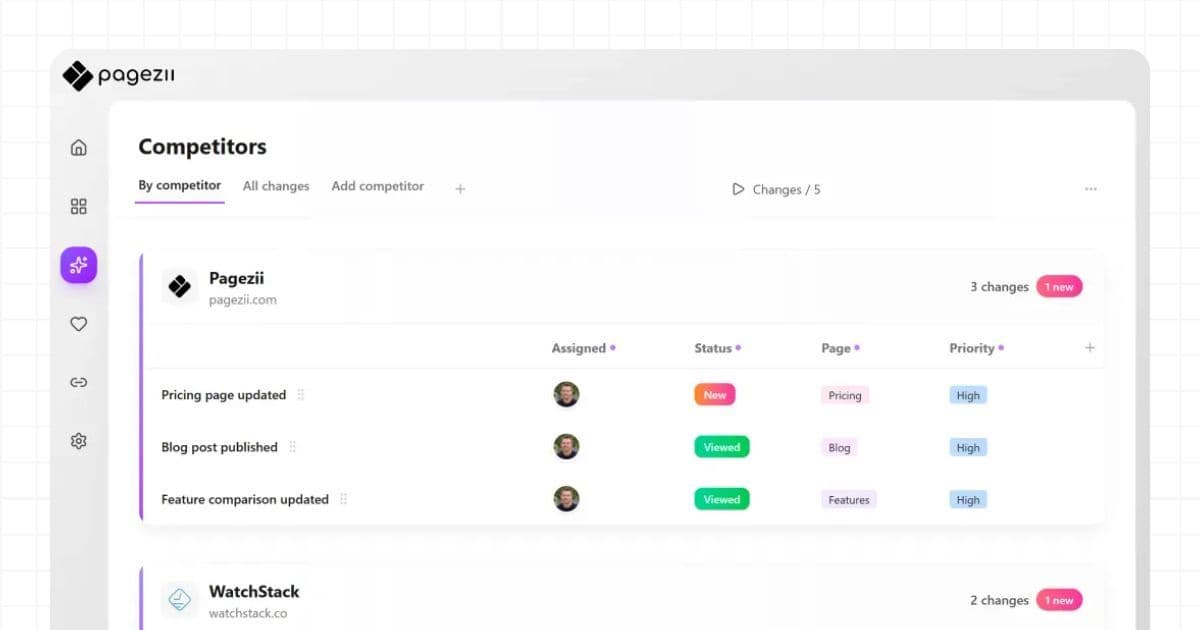
Once manual competitor blog monitoring becomes too time-consuming, automated competitor tracking tools watch key pages — pricing, features, blog — and send alerts when something meaningful changes.
Using Competitor Blog Monitoring for Strategic Decisions
Intelligence without action is noise. For each signal you extract from a competitor's blog content, ask one question: does this change anything we should be building, targeting, or defending?
A competitor moving upmarket with their content might mean you accelerate your SMB positioning. A competitor abandoning a topic cluster you own might mean you double down on that territory. A competitor launching a technical content series might signal they are targeting developer buyers — prompting you to review your own developer-facing messaging.
SaaS competitor monitoring works best when the signals flow directly into product and roadmap discussions, not just into a marketing team's awareness file.
Conclusion
Your competitors are not hiding their strategy. They are publishing it, article by article, every week. Founders and product leads who treat competitor blog monitoring as a structured intelligence practice gain a consistent informational edge over those who treat it as casual reading. Start tracking topic clusters, CTA shifts, and keyword patterns — and those signals will start informing your roadmap before the market catches up.
About the Author

Anika Patel
Customer Support
Anika Patel
Customer Support
Anika helps Pagezii users with quick support, resolving issues and guiding users through the platform’s features and tools.
Frequently Asked Questions
Start by identifying your top three competitors and subscribing to their RSS feeds or newsletters. Create a shared document to log new posts by topic, format, target keyword, and CTA each month. Within two to three months, patterns emerge. Once manual monitoring becomes too time-consuming, automated competitor tracking tools can watch key pages and flag changes without manual site visits.
Audience Context
SaaS founders and product leads who want to extract strategic intelligence from competitor blog content before it becomes obvious market news.
Related Insights
- 8 best practices for monitoring competitor blogs — Blog monitoring best practices
- Competitor blog metrics to track — 9 competitor content signals
- 10 things competitor content tells you about their strategy — Reading content strategically
- We tracked 5 competitors manually for 6 months — Manual tracking limitations
References
- Content Marketing Institute. (2024). B2B content marketing benchmarks, budgets, and trends. https://contentmarketinginstitute.com/research/
- Google Search Central. (2023). Creating helpful, reliable, people-first content. https://developers.google.com/search/docs/fundamentals/creating-helpful-content
- Wikipedia contributors. (2024). Competitive intelligence. https://en.wikipedia.org/wiki/Competitive_intelligence
- Chaffey, D. (2024). Content marketing strategy guide. https://www.smartinsights.com/content-management/content-marketing-strategy/
- Porter, M. E. (1980). Competitive strategy: Techniques for analyzing industries and competitors. Free Press. https://en.wikipedia.org/wiki/Competitive_advantage
- Harvard Business Review. (2023). Competitive strategy topic hub. https://hbr.org/topic/subject/competitive-strategy
Disclaimer
This article is provided for informational purposes only. Pagezii aims to share practical insights on competitor tracking and market intelligence but does not guarantee completeness, accuracy, or specific business outcomes.