
Best Competitor Tracking Tools for Founders
Synopsis
Manual competitor tracking burns hours and misses signals. This category guide helps SaaS founders choose the right tools for monitoring pricing, features, blog content, and technical changes — and turn those alerts into decisions.
This is not a "top 10 tools" affiliate list. It is a category guide to help SaaS founders decide which types of competitor tracking tools for SaaS founders to use — for pricing changes, feature updates, blog content shifts, and technical signals — and how to turn those alerts into actual product and roadmap decisions.
The right competitor tracking tool turns missed signals into early decisions.
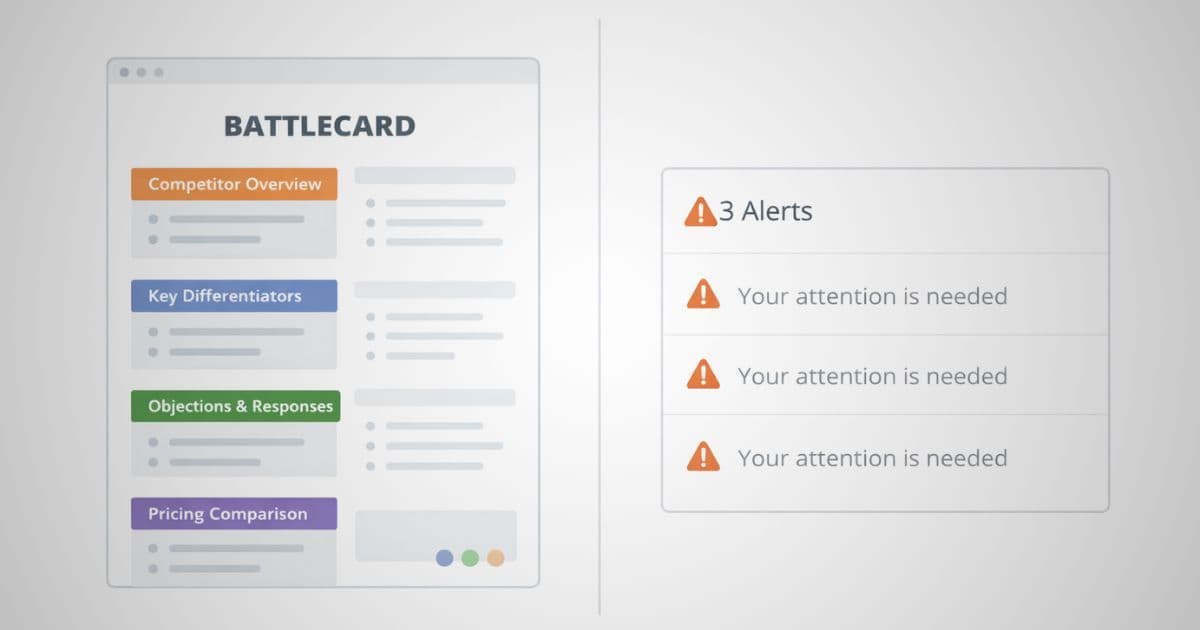
For SaaS founders, the goal is not just to monitor rivals, but to build a lightweight competitor monitoring system that turns pricing, feature, blog, and tech changes into roadmap and go-to-market decisions. Most founders start with a shared spreadsheet and a handful of bookmarks. Within a month the spreadsheet is stale. The right tools change that equation by monitoring the pages that matter automatically, so your team spends time acting on intelligence rather than collecting it.
What to Look for in a Competitor Tracking Tool
Before evaluating any tool, get clear on what you actually need to monitor. The most actionable competitive signals come directly from a competitor's website — the pages where strategic decisions surface first, often weeks before any press release or product announcement.
Core signals worth tracking:
- Pricing and packaging changes
- Feature and product page updates
- Homepage and messaging shifts
- Blog content and CTA changes
- Technical signals — DNS, stack, and uptime changes
A solid competitor tracking tool covers at least the first three automatically. The best ones cover all five and surface them in a format your team can act on without spending hours reviewing raw data.
Start with pricing, features, and blog pages. These three generate the most actionable signals for product and roadmap decisions and tend to change most frequently in fast-moving SaaS markets.
Best Competitor Tracking Tools for SaaS Founders in 2026
Rather than ranking individual products, this section breaks down the four main categories of competitor monitoring tools — what each does, when it is most useful, and what decision it helps drive.
| Competitor Monitoring Tool Types | |
|---|---|
| Tool Category | What It Tracks |
| Page change tools | Pricing, feature, and CTA updates |
| AI competitor platforms | Cross-competitor change patterns |
| SEO monitoring tools | Keyword rankings and content strategy |
Page-Level Change Detection Tools
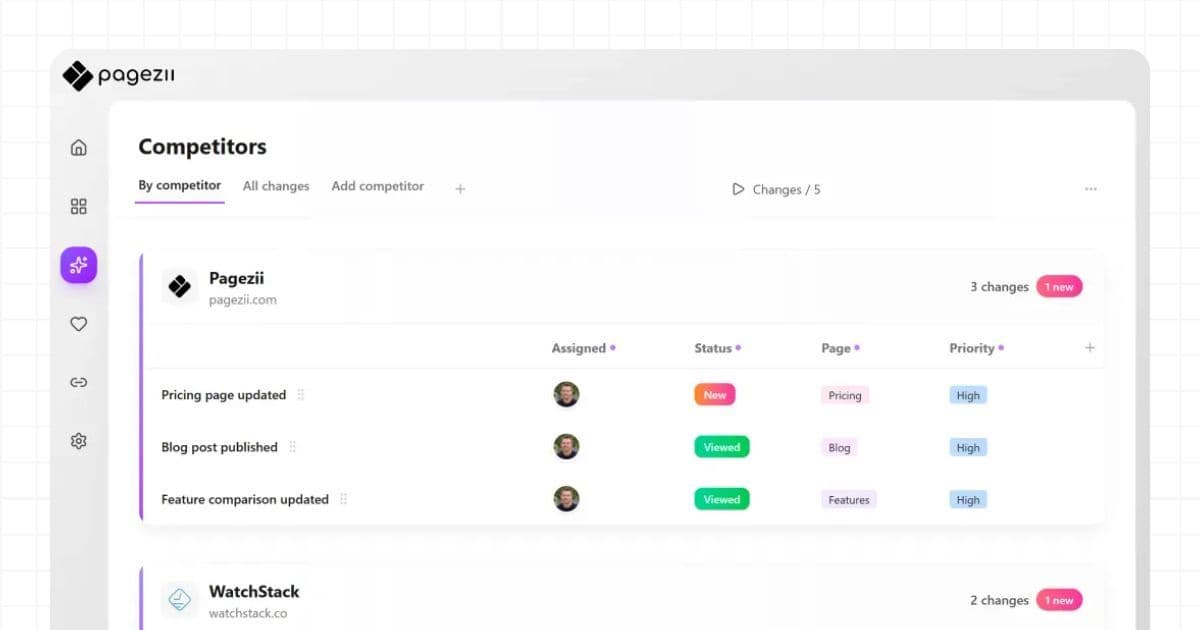
These tools monitor specific competitor URLs and alert you when content changes. You define which pages to watch, and the tool notifies you when something shifts. This category is most valuable for pricing and feature page monitoring, where even small content changes can signal a strategic repositioning.
A practical example: you receive an alert that a competitor added usage-based pricing to their Pro plan. That gives your sales team a week or two to adjust messaging before prospects start asking about it in calls — rather than discovering it mid-conversation for the first time.
AI-Powered Competitor Intelligence Platforms
A newer category uses AI to go beyond detecting changes — summarizing what changed, categorizing the update type, and surfacing patterns across multiple competitors simultaneously. Instead of reviewing 50 raw alerts, you see a weekly summary: three competitors raised prices, one launched enterprise SSO, two published content targeting procurement workflows.
For teams tracking five or more competitors across several page types, this format dramatically reduces the time to actionable insight. Understanding how competitors use blog content as a strategic signal becomes significantly easier when a platform is already categorizing and summarizing those updates for you.
Hint
AI-powered platforms deliver the most value when tracking five or more competitors across multiple page types. Below that threshold, a simpler page-detection tool is often sufficient to start.
SEO and Keyword Monitoring Tools
SEO-focused competitor tracking tools surface intelligence about a rival's organic search strategy — which keywords they are ranking for, which content is gaining traction, and where their domain authority is growing. The most useful output is keyword cluster analysis: understanding which topics a competitor is systematically building authority around.
When a competitor starts consistently ranking for keywords adjacent to your core product, that signals an investment in a new segment — often before any product page or sales motion reflects it. Keeping a clear view of the key SEO KPIs for competitor monitoring ensures your team focuses on the metrics that drive decisions rather than vanity data.
Technical and Infrastructure Monitoring Tools
DNS monitoring, uptime tracking, and tech stack detection sit at the more technical end of competitor intelligence. They surface infrastructure changes — new subdomains, hosting shifts, additions to a competitor's technology stack — that often precede product launches or strategic pivots.
A practical example: a competitor adds an enterprise SSO provider to their stack and spins up a new subdomain. Neither change appears in any announcement — but both signal an upmarket move underway. For technically aware product teams, this layer surfaces intent before it becomes visible anywhere else.
Building a Competitor Tracking Stack
Most SaaS teams do not need one tool that does everything. A practical stack combines two to three tools covering different signal types. More important than the tools themselves is the review workflow — alerts that nobody reads produce no intelligence.
Sample Stacks by Stage
- Early-stage (solo founder or small team): One page-level change detection tool for pricing, features, and homepage + one lightweight SEO tool for keyword monitoring.
- Growing team (5–50 people): One AI-powered competitor intelligence platform for automated summaries and multi-competitor coverage + one SEO suite for deeper keyword and content analysis + occasional manual audits.
- Scaled team: AI-powered platform + SEO suite + technical infrastructure monitoring for DNS and stack signals + a quarterly structured audit feeding directly into roadmap planning.
Alert review cadence matters as much as tool choice. A weekly review of new alerts combined with a monthly deeper competitive intelligence session is a sustainable rhythm for most teams. Running a periodic structured competitor website audit alongside automated monitoring ensures you also catch the slower structural shifts that real-time tools can underweight.
Once manual competitor tracking becomes too time-consuming, automated tools watch key pages — pricing, features, blog — and send alerts when something meaningful changes, freeing your team to act rather than monitor.
What the Best Competitor Tracking Tools Have in Common
Use these four criteria as a checklist when evaluating any competitor tracking tool before committing:
- Coverage: Monitors the pages that matter — pricing, features, blog, and homepage — without constant manual reconfiguration.
- Noise control: Sends alerts at the right frequency — enough to stay current, not so often that they become background noise your team ignores.
- Insight, not just data: Produces summaries, change logs, or categorized alerts that connect directly to a decision, not just a raw notification that something changed.
- Workflow fit: Integrates into how your team already communicates — email, Slack, or a shared weekly review document — so intelligence actually reaches the people who act on it.
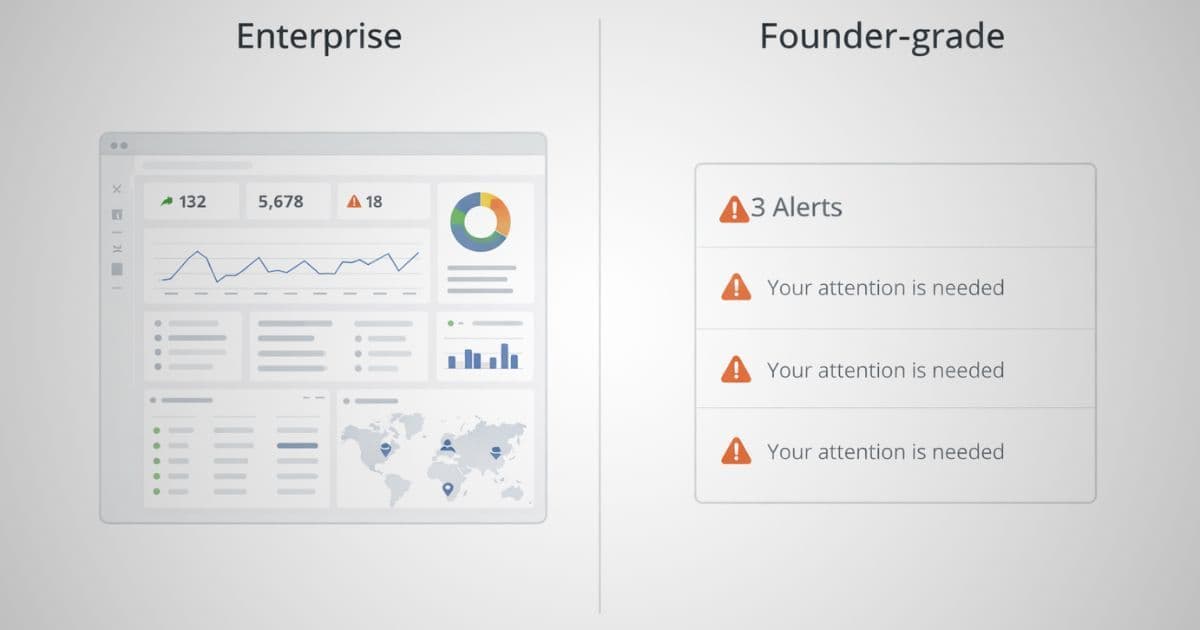
For founders specifically, the best tools reduce the cognitive overhead of staying competitive. A well-configured stack should surface what matters when it matters and stay quiet when nothing significant has changed.
Conclusion
The gap between founders who catch competitor moves early and those who discover them late is not intelligence — it is tooling and workflow. Manual tracking breaks down at scale. The right competitor monitoring tools for SaaS founders make systematic coverage sustainable, turning a task that eats hours into a workflow that surfaces the most critical changes automatically. Start with pricing, features, and blog. Build a simple review cadence. Expand the stack as your team grows.
About the Author

Marco Alvarez
Software Developer
Marco Alvarez
Software Developer
Marco is a software developer at Pagezii, building reliable backend systems and tools that collect, process, and organize competitor data.
Frequently Asked Questions
The best competitor tracking tools for SaaS founders combine page-level change detection with AI-powered summaries, covering pricing pages, feature pages, and blog content. Adding an SEO monitoring layer rounds out most stacks. The right choice depends on how many competitors you track and how much time your team has to review signals each week.
Audience Context
SaaS founders, product leads, and growth teams who need to monitor competitors systematically without spending hours on manual checks each week.
Related Insights
- How competitors use blog content as a strategic signal — Reading rival content for early strategy signals
- We tracked 5 competitors manually for 6 months — What manual tracking misses
- Competitor DNS and tech stack signals — Technical intelligence layer
- Competitor content strategy examples worth monitoring — Real-world content signal examples
- How to monitor competitor backlink moves — Backlink strategy as a competitive signal
References
- HubSpot. (2024). How to do a competitive analysis: A step-by-step guide. HubSpot Blog. https://blog.hubspot.com/marketing/competitive-analysis-kit
- Harvard Business Review. (2023). Competitive strategy topic hub. HBR. https://hbr.org/topic/subject/competitive-strategy
- Wikipedia contributors. (2024). Competitive intelligence. Wikipedia. https://en.wikipedia.org/wiki/Competitive_intelligence
- Chaffey, D. (2024). Competitor analysis guide for digital marketers. Smart Insights. https://www.smartinsights.com/digital-marketing-strategy/competitor-analysis/
Disclaimer
This article is provided for informational purposes only. Pagezii aims to share practical insights on competitor tracking and market intelligence but does not guarantee completeness, accuracy, or specific business outcomes.