

10 Things Competitor Content Tells You About Their Strategy
Synopsis
Every word a competitor publishes is a strategic decision. Learn how to read their content like a strategist — from keyword targeting to CTA copy to what they deliberately avoid writing about
Your competitors write content with intent. Every post they publish, every page they update, and every word they change is a strategic decision. Learning to read competitor content the way a strategist would — not just a reader — is one of the most underused competitive advantages available to founders and product teams.
Read competitor content like a strategist. Every update signals strategic intent.
Here are 10 specific things to look for.
1. Their Target Keyword Reveals Their Target Customer
When a competitor titles a post 'How to Manage a Remote Engineering Team,' the keyword isn't just an SEO tactic — it's a customer signal. They're targeting engineering leaders. They're probably building features or messaging that speaks to that persona. That's actionable for your positioning.
Read competitor post titles not as content — read them as targeting decisions.
2. The CTA Tells You Their Go-to-Market Motion
A competitor whose blog CTAs say 'Talk to Sales' is running a sales-led motion. One that says 'Start Free — No Credit Card' is product-led. A shift between these — especially on high-traffic posts — is a strategic signal you should notice.
3. Heading Structure Reveals Funnel Priority
H2s aren't just for structure. They represent the topics a competitor thinks are important enough to headline. A new H2 section on a features page titled 'For Teams of 50+' tells you they're moving upmarket. One titled 'Set up in minutes' tells you they're fighting friction.
4. The Words They Use for Your Category
Pay close attention to what a competitor calls the problem they solve. If they've shifted from 'project management' to 'work OS,' that's not a copy tweak — it's a category play. When competitors start using new category language, it often precedes a broader positioning shift.
5. Comparison Content Is a Competitor Acknowledgement
When a competitor publishes '5 Alternatives to [Your Product]' or 'How We Compare to [Your Product],' they're telling you they see you as a threat worth addressing. These posts are also the clearest window into how they position themselves against you — and where they think they win.
6. Long-Form vs. Short-Form Tells You About Budget
Long-form, well-researched content is expensive to produce. A competitor suddenly publishing deep-dive guides after months of thin posts is usually a signal of a new content hire, an agency engagement, or a strategic decision to compete seriously in organic search.
7. Internal Linking Patterns Show Product Priorities
Watch what competitor blog posts link to. A cluster of posts all linking to the same new feature page is a coordinated launch push. Posts linking to a pricing page from informational content is an aggressive conversion play. Links tell you what they care about right now.
internal links on competitor blog posts are a real-time view of their marketing priorities.
8. Post Timing Often Correlates with Launches
A burst of content around a specific topic often precedes or follows a product launch. Three posts about 'automated reporting' in a single month usually means they just shipped automated reporting, or they're about to. This gives you early intelligence on their product roadmap.
9. Reader Profile Signals (Tone and Complexity)
Is the content written for a technical audience or an executive one? Jargon-heavy posts target practitioners. Big-picture, ROI-focused content targets buyers. A shift in tone often signals a shift in the customer they're prioritizing in sales.
10. What They're Not Writing About
Gaps in a competitor's content strategy are opportunities. If they're not addressing a major customer pain point you know exists, that's a positioning opening. The absence of content is as informative as the content itself.
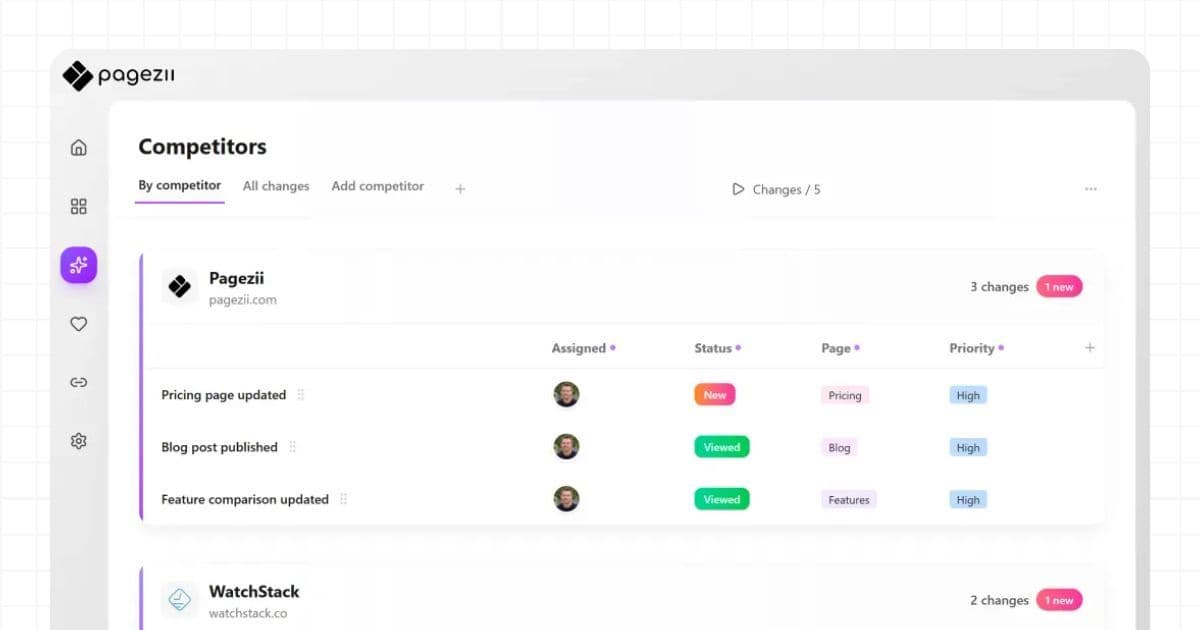
Reading all of this consistently — across multiple competitors — requires a system. Pagezii tracks changes to competitor key pages and blog activity so you get the signal automatically, not when you happen to remember to check.
About the Author

Mei Lin Tan
QA specialist
Mei Lin Tan
QA specialist
Mei Lin is a QA specialist at Pagezii ensuring product reliability through rigorous testing, clear bug reporting, and quality assurance processes.
Frequently Asked Questions
Keywords are targeting decisions. A post titled 'How to manage a remote engineering team' tells you they're going after engineering leaders — which informs both their product priorities and their ICP.
Audience Context
Product marketers and founders who want a systematic framework for extracting competitive intelligence from the content competitors publicly publish — beyond just reading their posts.
Related Insights
- Competitor Blog Metrics Guide — Track the blog signals that reveal rival strategy.
- 8 Best Practices for Monitoring Competitor Blogs — Stay ahead with a structured blog watch process.
- Competitor Monitoring for Product Roadmap Protection — Guard your roadmap from rival feature launches.
- Competitor DNS and Tech Stack Signals Explained — Decode what rivals' tech choices reveal.
- Is Pagezii Right for You? — See if Pagezii fits your monitoring needs.
- Pagezii vs Klue: Which Competitor Tool Fits? — Compare features, pricing, and use cases.
References
- Hagiu, A., & Wright, J. (2020, January–February). When data creates competitive advantage. Harvard Business Review.
- Nielsen Norman Group. (2023). Content strategy for UX writers. Nielsen Norman Group.
- MIT Sloan Management Review. (2016). Mastering the market intelligence challenge. MIT Sloan Management Review.
- Federal Trade Commission. (2023). Understanding competition in digital markets. FTC.gov.
Disclaimer
This article is provided for informational purposes only. Pagezii aims to share practical insights on competitor tracking and market intelligence but does not guarantee completeness, accuracy, or specific business outcomes.